
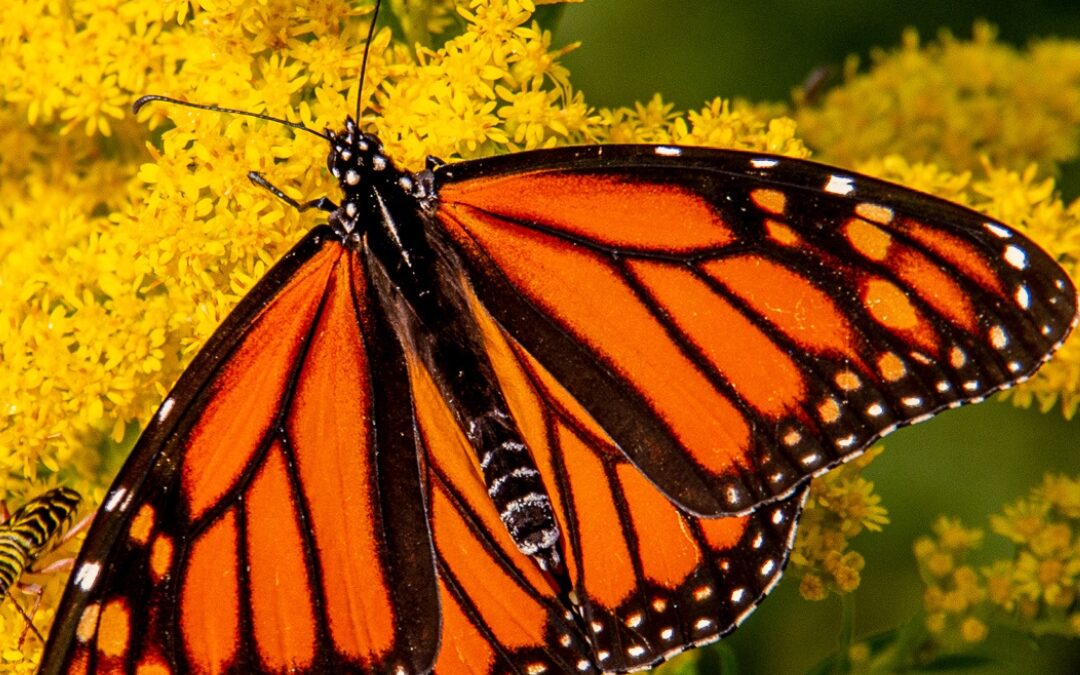
This past summer, our Busy Beaver volunteers helped plant over 100 native plants as part of our ongoing efforts to conserve, restore, and enhance the Indreland Audubon Wetland Preserve’s wetlands and surrounding natural areas. These new plantings represent an important step toward creating a healthier, more resilient habitat for birds, pollinators, and other native wildlife in Montana.
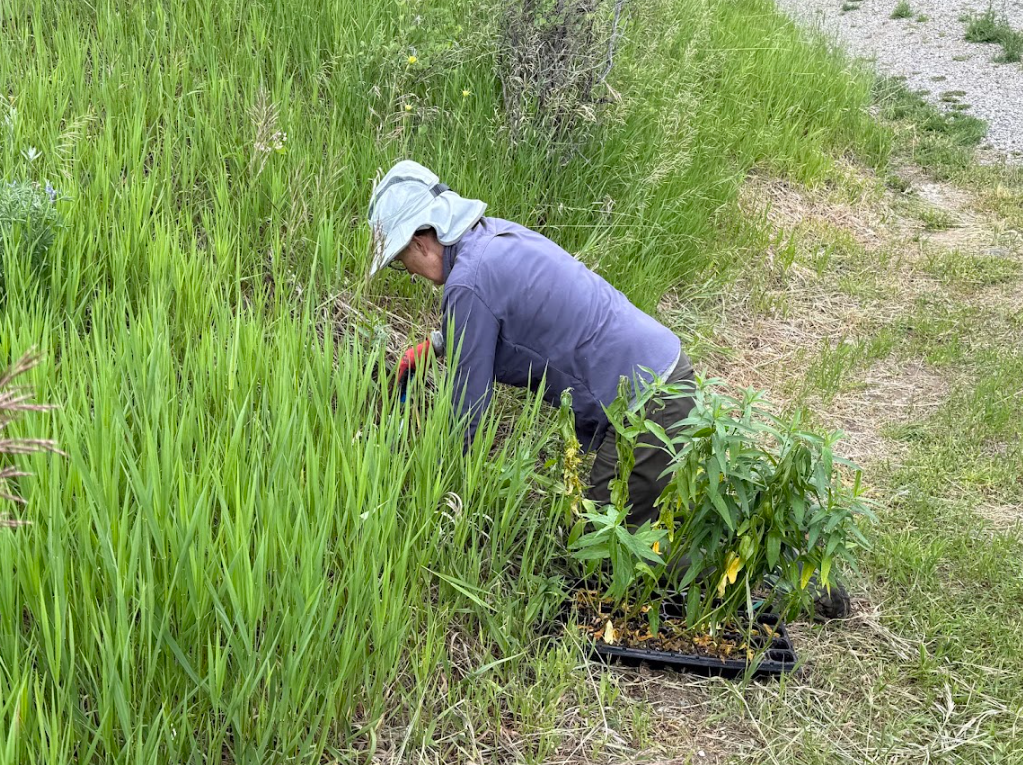
A Busy Beaver hard at work.
Why are native plants essential to a healthy, thriving ecosystem? Over thousands of years, bees, butterflies, birds, and other native wildlife have evolved alongside specific plants, developing intricate relationships that support entire ecosystems. As European settlers colonized North America and moved west, they also brought plants from other parts of the world. Some, like leafy spurge (Euphorbia esula), may have been introduced intentionally for their showy flowers, while others, like common hound’s-tongue (Cynoglossum officinale), arrived accidentally, hitching rides on clothing or in the fur of domesticated animals. By restoring plants native to Montana, we are rebuilding the foundation of an entire ecosystem, one plant at a time. After all, “If you build it, they will come.”
Planting a diversity of native species helps support pollinators throughout the growing season. Monarch butterflies, for example, don’t just prefer milkweed; their caterpillars need it to survive. Monarchs lay their eggs exclusively on milkweed, and the compounds their caterpillars consume from milkweed leaves make them toxic or unpalatable to many predators, including birds. Other native plants offer a wealth of resources for wildlife. Coneflowers (Echinacea), for instance, provide food and habitat for multiple species. Silvery checkerspot caterpillars rely on certain coneflowers as host plants, while adult butterflies feed on the nectar they provide. After coneflowers finish blooming, their seedheads provide food for American goldfinches, which feed seeds to their young during the late summer, when other food resources may become scarce. Later in the season, late-blooming and field goldenrods offer an important source of nectar for insects preparing for winter.
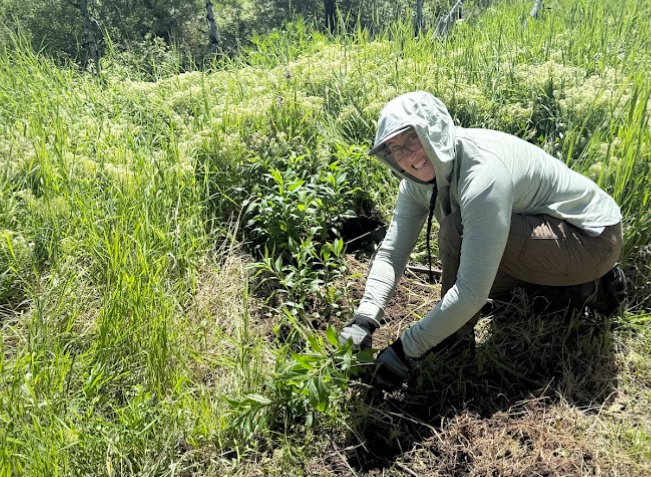
Allison Rognlie, a Busy Beaver, hard at work.
Beyond the valuable pollen and nectar that flowers provide, native plants offer other ecological benefits. Their deeper root systems help stabilize soil, reduce erosion, and support soil health. Because these plants are adapted to Montana’s climate and growing conditions, they can also be better suited to local environmental challenges.
As these new plants grow and mature, they will help create an increasingly welcoming landscape for native wildlife. Every plant makes a difference, and you can, too!
Interested in helping our mission? Become a Busy Beaver! Visit bozemanwetlands.org to learn more about how you can be an advocate for Bozeman’s wetlands—not only for wildlife, but for future generations.
Plants Restored at the Indreland Audubon Wetland Preserve in 2026:
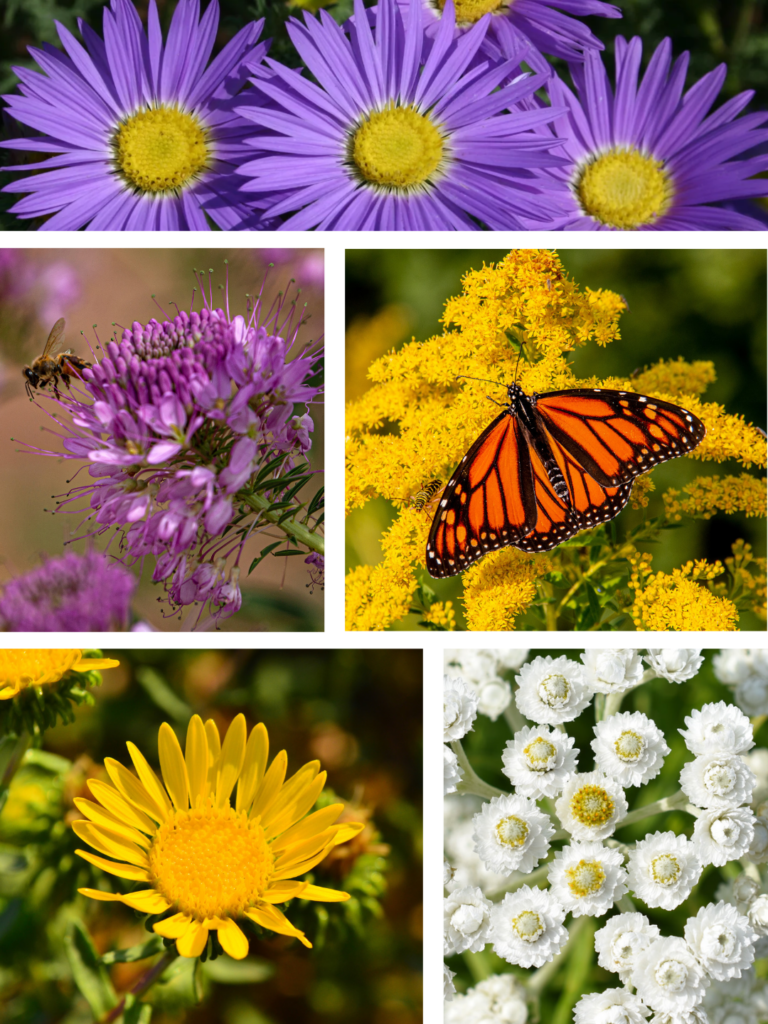
L-R: Takhoka Daisy, Rocky Mountain Bee Plant, Goldenrod, Curlycup Gumweed, Pearly Everlasting
- Pearly Everlasting (Anaphalis margaritacea)
- Hemp Dogbane (Apocynum cannabinum)
- Silver Sagebrush (Artemisia cana)
- Silver Wormwood (Artemisia ludoviciana)
- Swamp Milkweed (Asclepias incarnata)
- Showy Milkweed (Asclepias speciosa)
- Rocky Mountain Beeplant (Cleome serrulata)
- Narrow-leaved Coneflower (Echinacea angustifolia)
- Purple Coneflower (Echinacea purpurea)
- Curlycup Gumweed (Grindella squarrosa)
- Common Sunflower (Helianthus annuus)
- Tahoka Daisy (Machaeranthera tanacetifolia)
- Upright Prairie Coneflower (Ratibida columnifera)
- Canada Goldenrod (Solidago canadensis)
- Late Goldenrod (Solidago gigantea)
- Field Goldenrod (Solidago nemoralis)
- Smooth Blue Aster (Symphyotrichum laeve)
- Dotted Blazing Star (Liatris punctata)
Montana Pollinator Plant Resources & News
- News: Global Invasive Plant Study: Evolution Can Make Invaders Stronger Competitors
- News: Montana’s Department of Natural Resources Grows a Million Native Plants
- MSU: Building and Maintaining a Pollinator-friendly Garden Landscape
- The Montana Native Plant Society
- MSU Extension: Native Plants for Montana’s Home Gardens
- MSU Extension YouTube: Urban Insects and Pollinators
- Pollinator Partnership: Selecting Plants for Pollinators PDF (Montana)
- USDA Insects and Pollinators Webpage
- ConsumerNotice.org: Dangers of Roundup and Other Alternatives